Rose Campion
Rose Campion Seeds
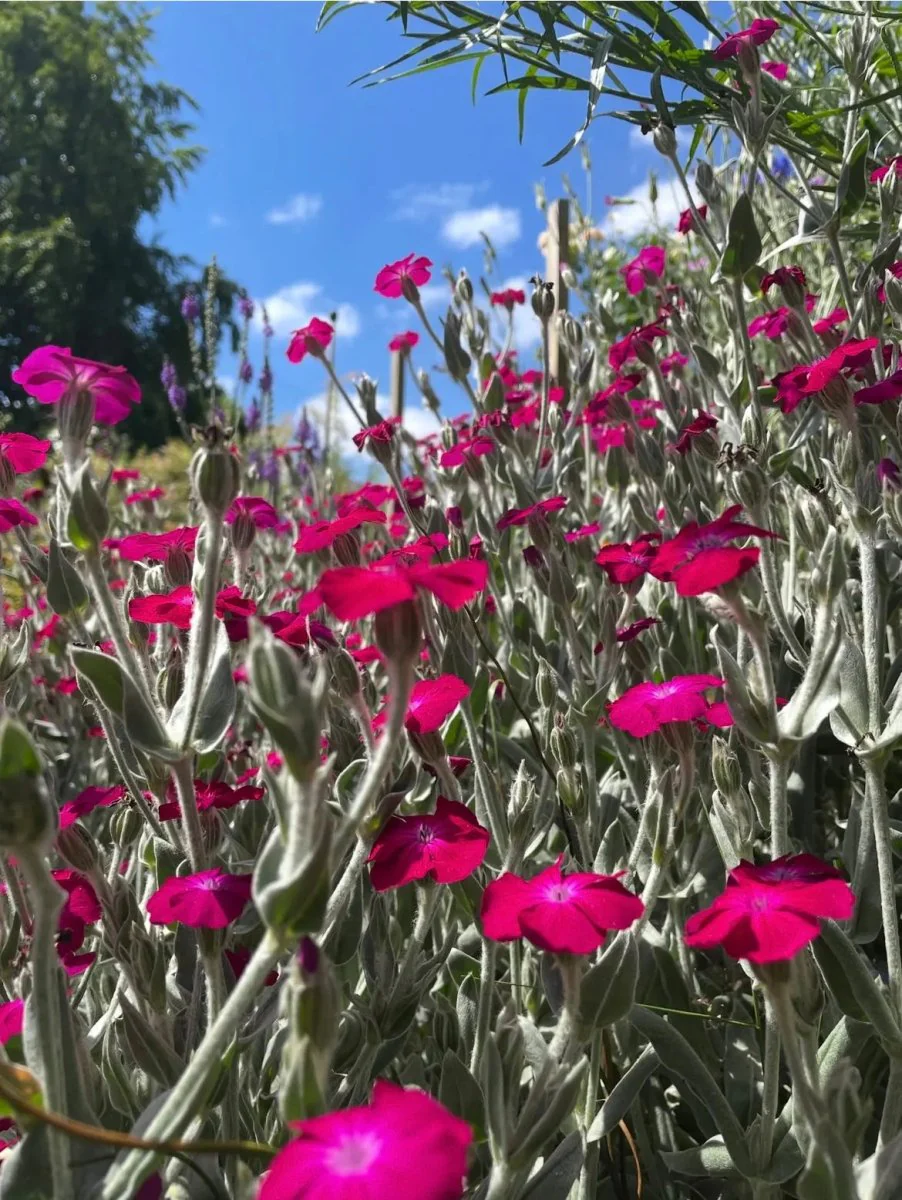
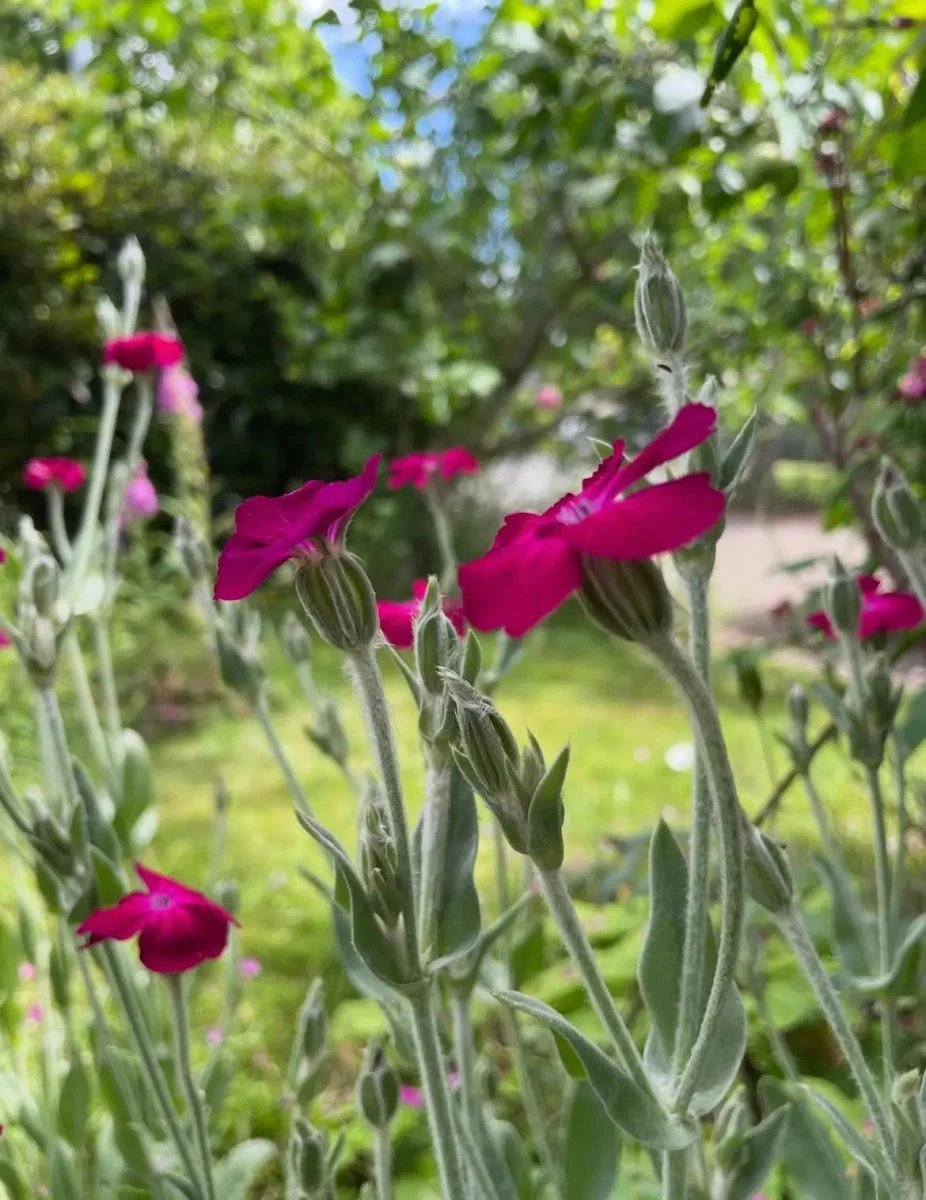
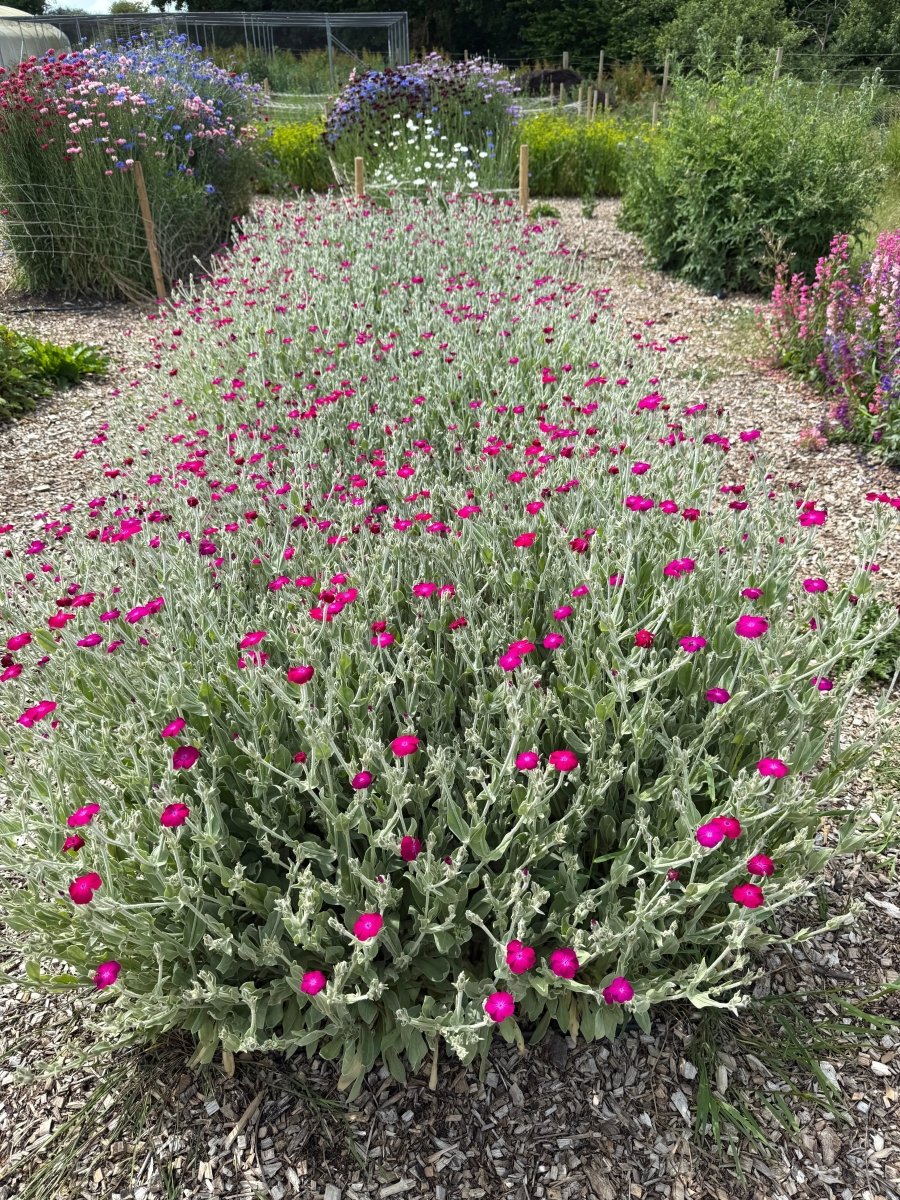
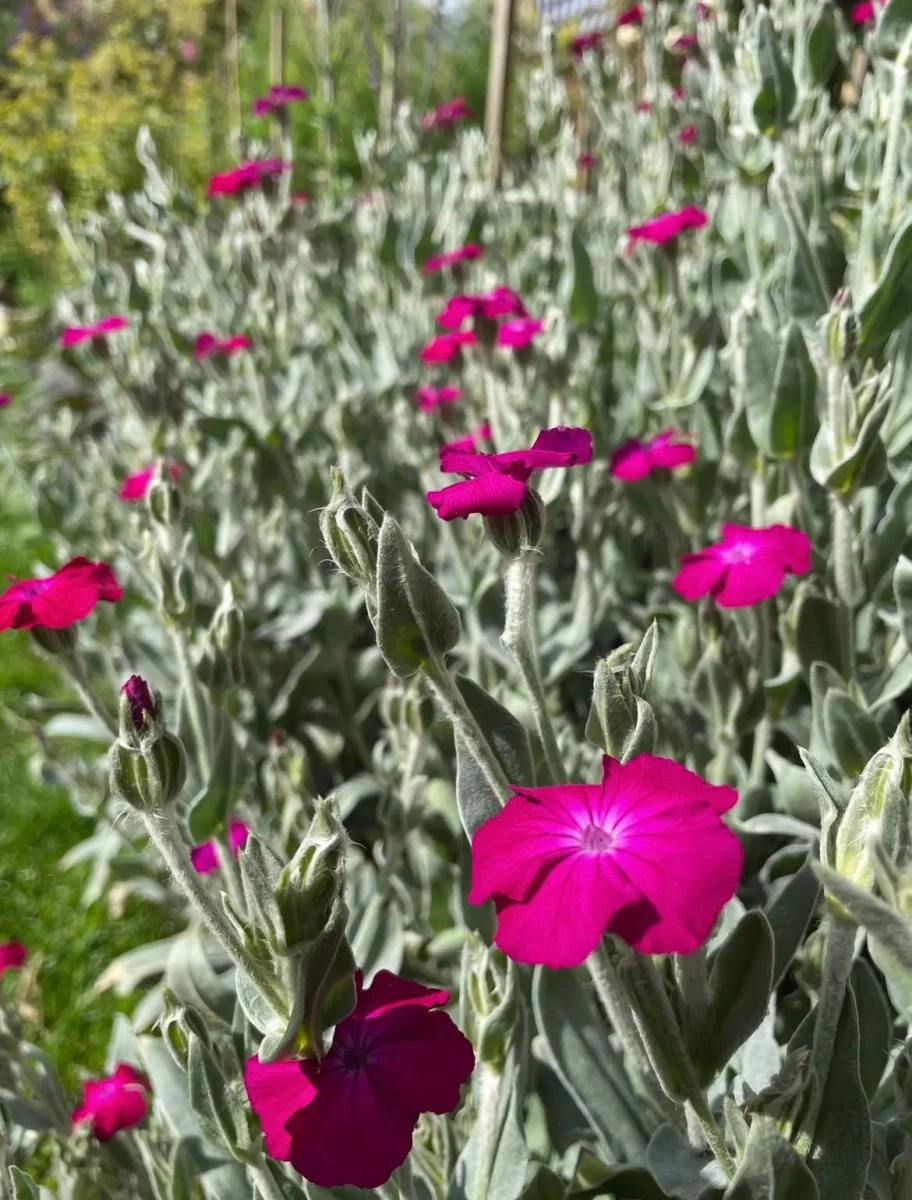
Rose Campion (Lychnis coronaria) is a stylish, effortless, and striking plant known for its silver foliage and intense magenta flowers. It forms a basal rosette of exceptionally soft, woolly, silver-grey leaves that feel like felt to the touch. This silvery mound persists through the winter, providing garden structure when other plants disappear.
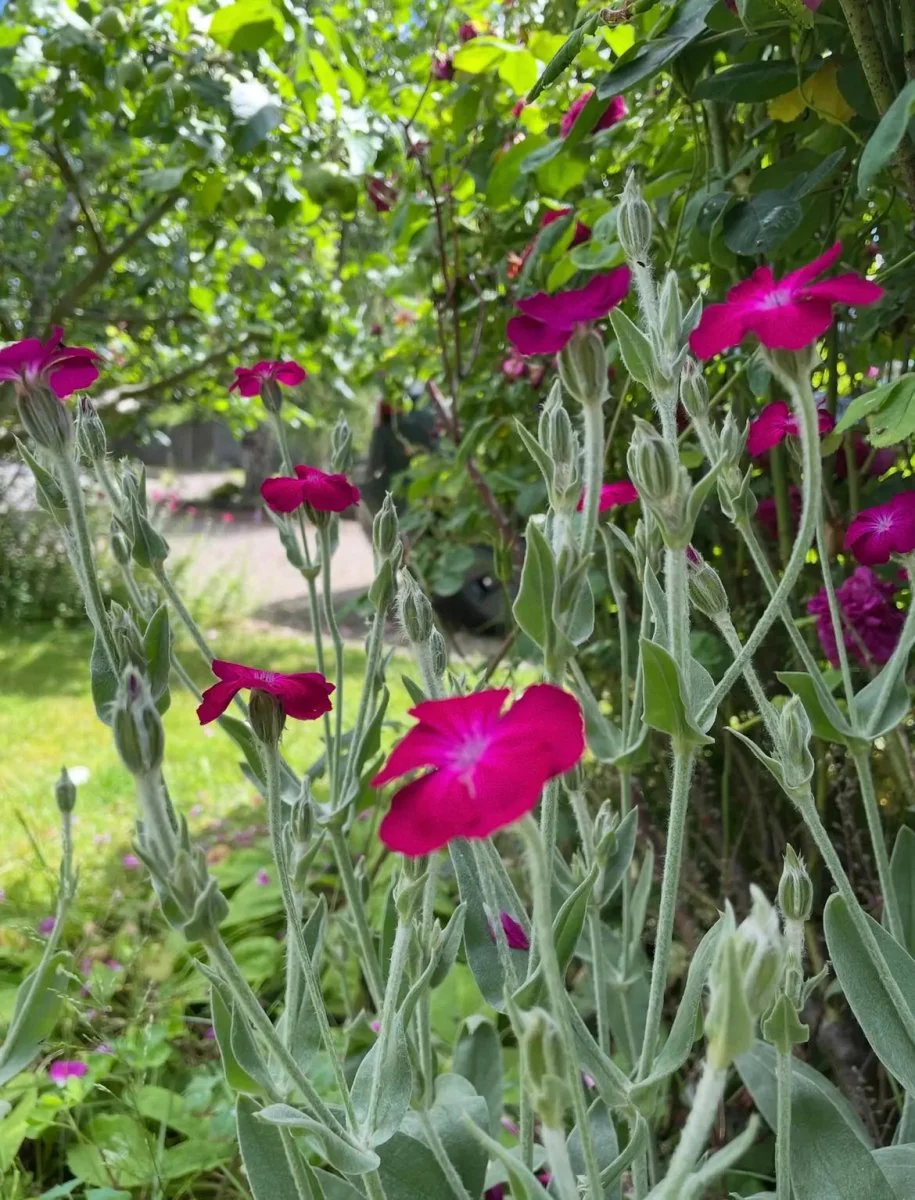
In the summer, the plant produces tall, branched silver stems topped with simple, round, neon-bright magenta-pink flowers that appear to glow against the pale, ghostly stems. It is a short-lived perennial (often biennial) that typically lives for 2–3 years, though it is a prolific self-seeder that creates permanent, renewing colonies. It is officially recognized as an RHS Plant for Pollinators and is highly attractive to bees and butterflies.
Read More
🌿 Understanding the Plant
Lychnis coronaria is an exceptionally Very Hardy Perennial (H7). It is one of the toughest plants for a UK garden, capable of surviving temperatures below -20°C. While individual plants are short-lived, they naturalise beautifully through self-seeding, creating a permanent and evolving colony in your borders.
Velvet Protection: The signature silver "felt" on the leaves is a biological adaptation that helps the plant reflect intense summer heat and survive in poor, dry soils where other cottage garden plants might scorch.
Winter Structure: Because the silver rosettes are semi-evergreen, they provide valuable visual interest and texture during the "bare" months of January and February when most other perennials have retreated underground.
🌱 Growing Guide
Rose Campion is famous for "thriving on neglect" and is one of the easiest perennials to establish from seed.
How to Sow:
Sow indoors from February to May or direct sow outdoors in late spring. The seeds require light to germinate; scatter them thinly on the surface of moist compost and press them in gently—do not cover them with soil. Germination typically takes 14-21 days at 20°C.
Where to Plant:
They demand full sun and thrive in poor, dry, or stony soil. Crucial Tip: Do not plant in rich, heavily manured soil; excessive nutrients will cause the plant to lose its silver colour, become "leggy," and flop over.
Ongoing Care:
Once established, they are extremely drought-tolerant. Deadhead spent flowers to encourage a longer blooming season, but allow the final flowers to set seed if you wish for the colony to expand and renew itself naturally each year.
📋 Plant Specifications
| Botanical Name | Lychnis coronaria (syn. Silene) |
| Common Name | Rose Campion / Dusty Miller |
| Plant Type | Hardy Perennial (Short-lived) |
| Hardiness | H7 (Extremely Hardy) |
| Light Requirements | Full Sun ☀️ |
| Height | 60cm - 80cm |
| Spread | 45cm |
| Spacing | Plant 40cm apart |
| Flowering Period | June to August |
| Perfect For | 🦋 Butterfly Magnet 🧶 Tactile Woolly Foliage ☀️ Dry, Sunny Banks 🏠 Gravel Gardens |
| Seeds per Packet | Approximately 200 seeds |
🤝 Beautiful Garden Combinations
The luminous magenta and silver of Rose Campion works best with contrasting colours and textures:
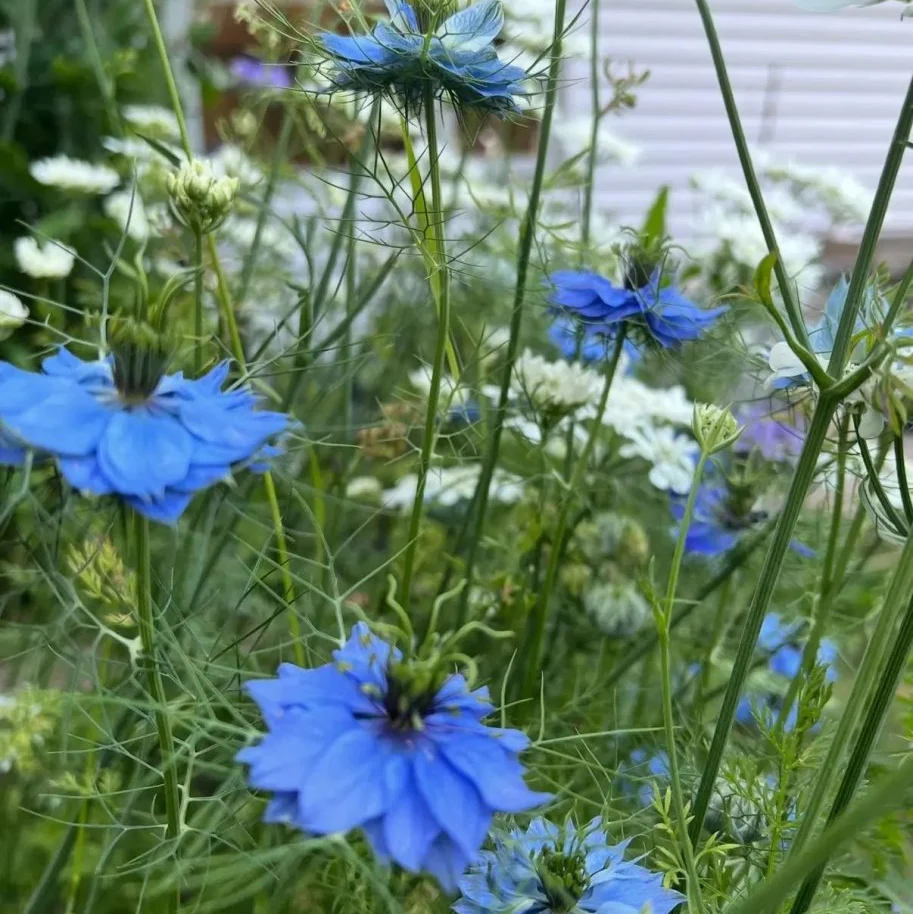
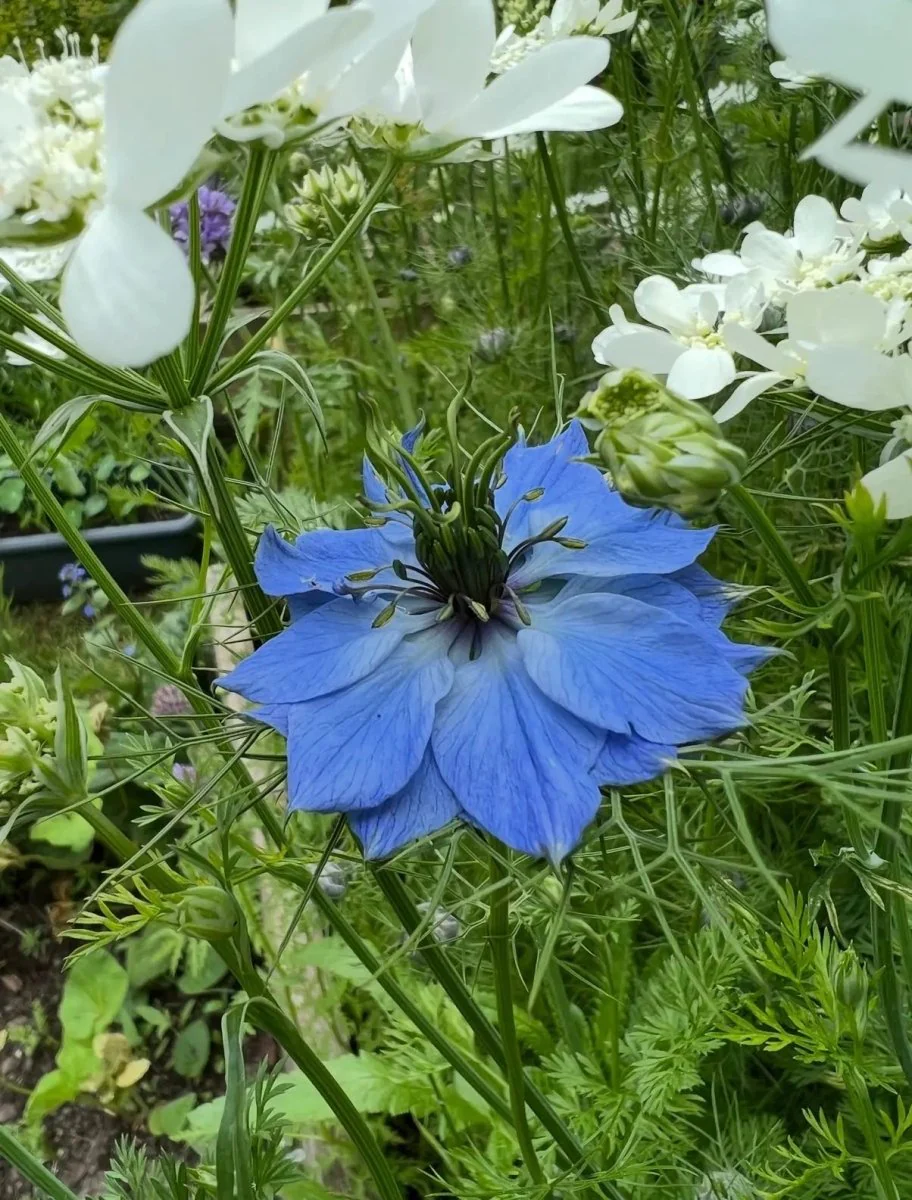
- ☁️ Nigella 'Miss Jekyll Blue': The Cool Contrast. The soft, hazy azure-blue of Nigella provides a stunning visual "buffer" for the neon-bright pink of the Campion. Both thrive in the same well-drained, sunny conditions.
- 🏰 Larkspur 'Giant Hyacinth Mixed' : The Vertical Spike. The tall, rigid spikes of Larkspur rising through the rounded, multi-branched Campion create excellent height variation and architectural depth.
📅 Sowing & Flowering Calendar
Sow in spring for a glowing summer display that returns year after year.
🏆 RHS Plants for Pollinators
Rose Campion is listed on the RHS Plants for Pollinators list. Its neon-bright, nectar-rich flowers are a vital resource for bumblebees and butterflies, who are easily attracted to the glowing magenta blooms throughout the summer.
Original: $3.32
-65%$3.32
$1.16Product Information
Product Information
Shipping & Returns
Shipping & Returns
Description
Rose Campion Seeds
Rose Campion (Lychnis coronaria) is a stylish, effortless, and striking plant known for its silver foliage and intense magenta flowers. It forms a basal rosette of exceptionally soft, woolly, silver-grey leaves that feel like felt to the touch. This silvery mound persists through the winter, providing garden structure when other plants disappear.
In the summer, the plant produces tall, branched silver stems topped with simple, round, neon-bright magenta-pink flowers that appear to glow against the pale, ghostly stems. It is a short-lived perennial (often biennial) that typically lives for 2–3 years, though it is a prolific self-seeder that creates permanent, renewing colonies. It is officially recognized as an RHS Plant for Pollinators and is highly attractive to bees and butterflies.
Read More
🌿 Understanding the Plant
Lychnis coronaria is an exceptionally Very Hardy Perennial (H7). It is one of the toughest plants for a UK garden, capable of surviving temperatures below -20°C. While individual plants are short-lived, they naturalise beautifully through self-seeding, creating a permanent and evolving colony in your borders.
Velvet Protection: The signature silver "felt" on the leaves is a biological adaptation that helps the plant reflect intense summer heat and survive in poor, dry soils where other cottage garden plants might scorch.
Winter Structure: Because the silver rosettes are semi-evergreen, they provide valuable visual interest and texture during the "bare" months of January and February when most other perennials have retreated underground.
🌱 Growing Guide
Rose Campion is famous for "thriving on neglect" and is one of the easiest perennials to establish from seed.
How to Sow:
Sow indoors from February to May or direct sow outdoors in late spring. The seeds require light to germinate; scatter them thinly on the surface of moist compost and press them in gently—do not cover them with soil. Germination typically takes 14-21 days at 20°C.
Where to Plant:
They demand full sun and thrive in poor, dry, or stony soil. Crucial Tip: Do not plant in rich, heavily manured soil; excessive nutrients will cause the plant to lose its silver colour, become "leggy," and flop over.
Ongoing Care:
Once established, they are extremely drought-tolerant. Deadhead spent flowers to encourage a longer blooming season, but allow the final flowers to set seed if you wish for the colony to expand and renew itself naturally each year.
📋 Plant Specifications
| Botanical Name | Lychnis coronaria (syn. Silene) |
| Common Name | Rose Campion / Dusty Miller |
| Plant Type | Hardy Perennial (Short-lived) |
| Hardiness | H7 (Extremely Hardy) |
| Light Requirements | Full Sun ☀️ |
| Height | 60cm - 80cm |
| Spread | 45cm |
| Spacing | Plant 40cm apart |
| Flowering Period | June to August |
| Perfect For | 🦋 Butterfly Magnet 🧶 Tactile Woolly Foliage ☀️ Dry, Sunny Banks 🏠 Gravel Gardens |
| Seeds per Packet | Approximately 200 seeds |
🤝 Beautiful Garden Combinations
The luminous magenta and silver of Rose Campion works best with contrasting colours and textures:
- ☁️ Nigella 'Miss Jekyll Blue': The Cool Contrast. The soft, hazy azure-blue of Nigella provides a stunning visual "buffer" for the neon-bright pink of the Campion. Both thrive in the same well-drained, sunny conditions.
- 🏰 Larkspur 'Giant Hyacinth Mixed' : The Vertical Spike. The tall, rigid spikes of Larkspur rising through the rounded, multi-branched Campion create excellent height variation and architectural depth.
📅 Sowing & Flowering Calendar
Sow in spring for a glowing summer display that returns year after year.
🏆 RHS Plants for Pollinators
Rose Campion is listed on the RHS Plants for Pollinators list. Its neon-bright, nectar-rich flowers are a vital resource for bumblebees and butterflies, who are easily attracted to the glowing magenta blooms throughout the summer.